Hardy's Cottage Garden Plants
Bistorta amplexicaulis 'Blackfield' PBR
Bistorta amplexicaulis 'Blackfield' PBR
In propagation
Couldn't load pickup availability
Plants are dispatched in growing condition and may not be in full flower. If too tall to pack safely, we may cut them back — this helps them establish more quickly. Read our Mail Order FAQs.


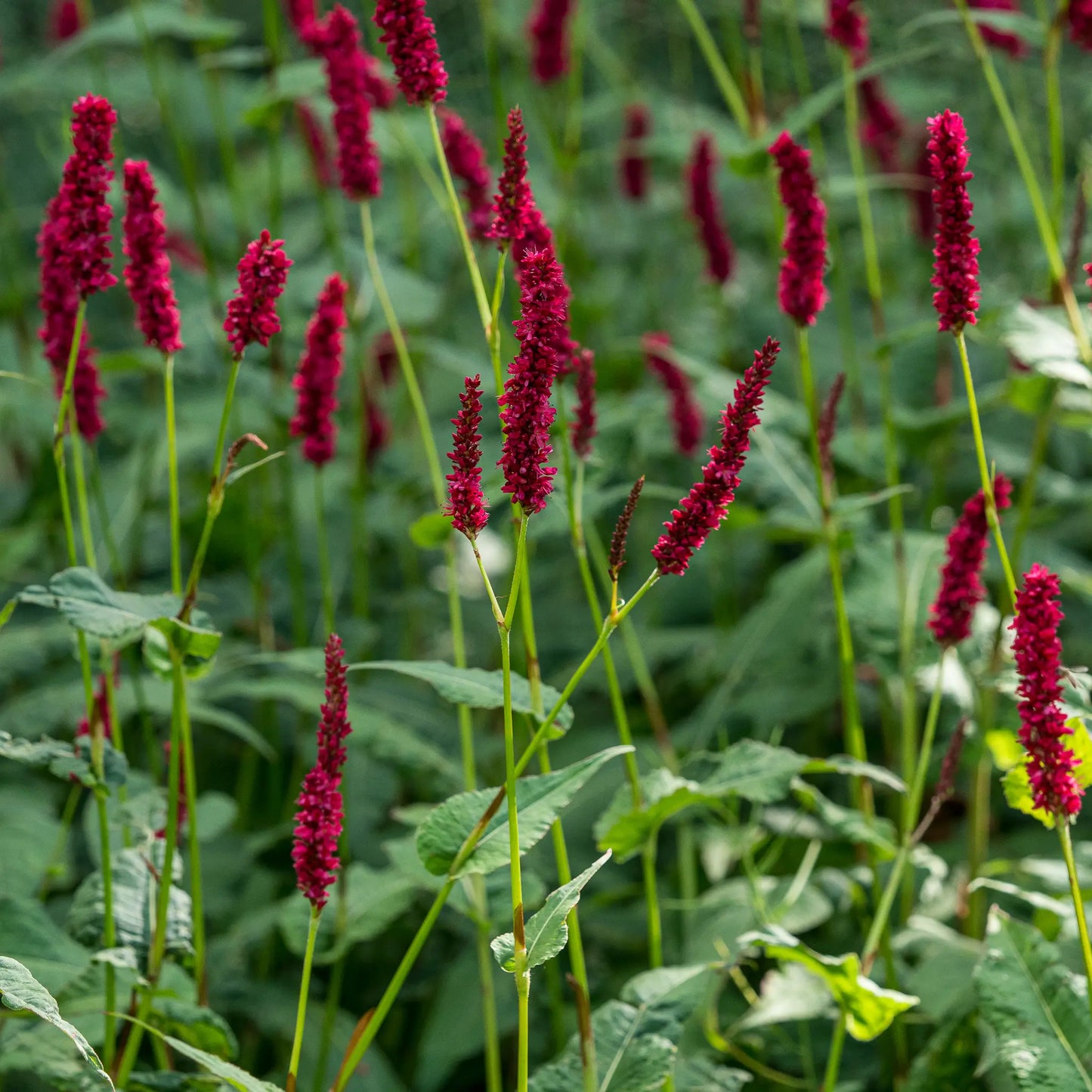
‘Blackfield’ is a particularly striking cultivar, its deep red bottlebrush flowers dancing in the breeze on willowy stems from midsummer deep into autumn. The near heart-shaped, dark green leaves clasp the stems — a characteristic reflected in the species name amplexicaulis.
Bred by Chris Ghyselen in Belgium and introduced in 2005, ‘Blackfield’ is a more compact form than most amplexicaulis cultivars. It thrives in sun or partial shade with fertile, moisture-retentive soil — ideal alongside streams, ponds and in boggy situations, where it will slowly spread. Its naturalistic good looks suit moist meadow, prairie and informal cottage garden schemes. Build on its depth of colour by combining with purples, oranges and pinks, or pair with Succisa pratensis for a striking contrast of flower form. Pollinators love it.
Synonym: Persicaria amplexicaulis ‘Blackfield’
Height × Spread: 90cm × 50cm